
Every Cor Vision installation uses the same proven profiles and hardware. The difference is in how the panels are arranged, whether they slide left or right, stack to one side, disappear into a wall, or meet at a corner without a post.
Below are the three configurations we build most often. Each changes how a room feels and how the opening works day to day.
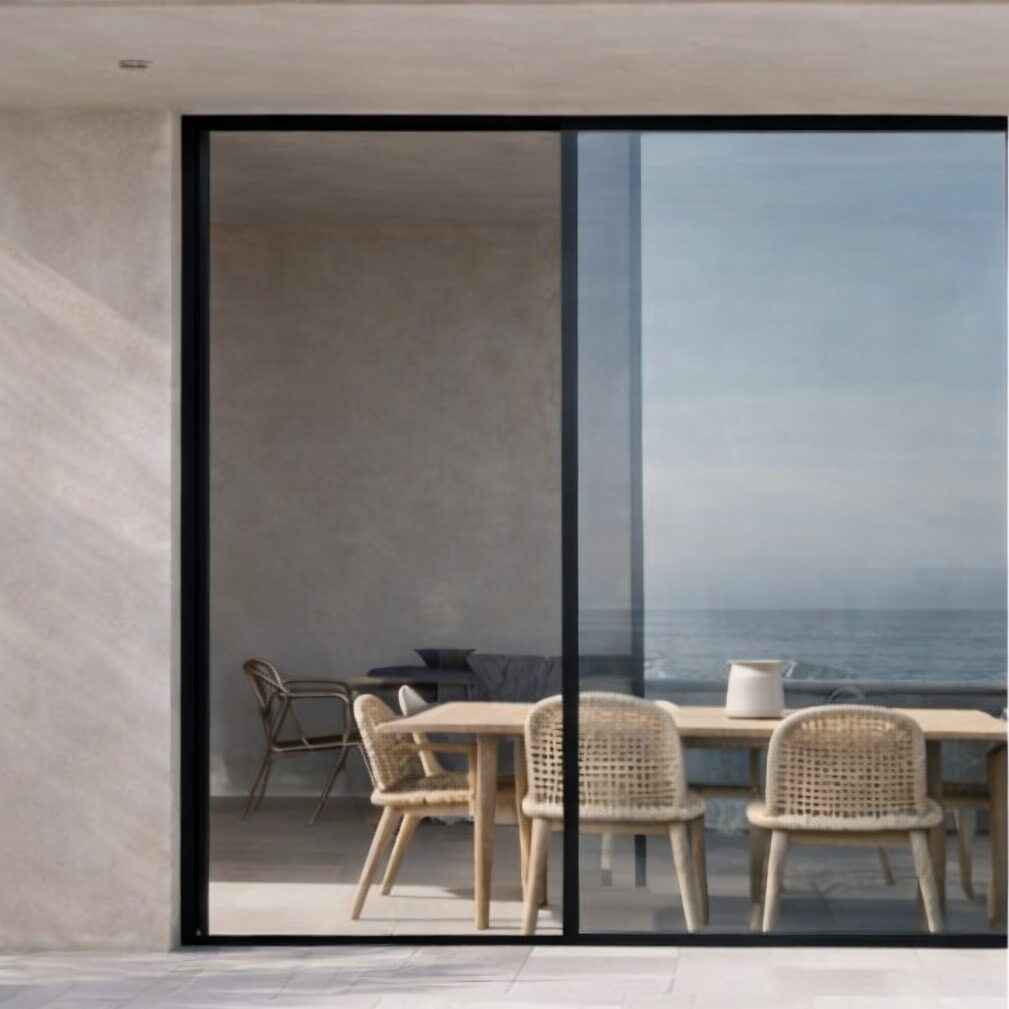
Two, three, or four panels on parallel tracks. Panels slide behind each other to open, stacking to one or both sides. This is the configuration for most rear extensions. Clean, simple, and easy to operate every day.
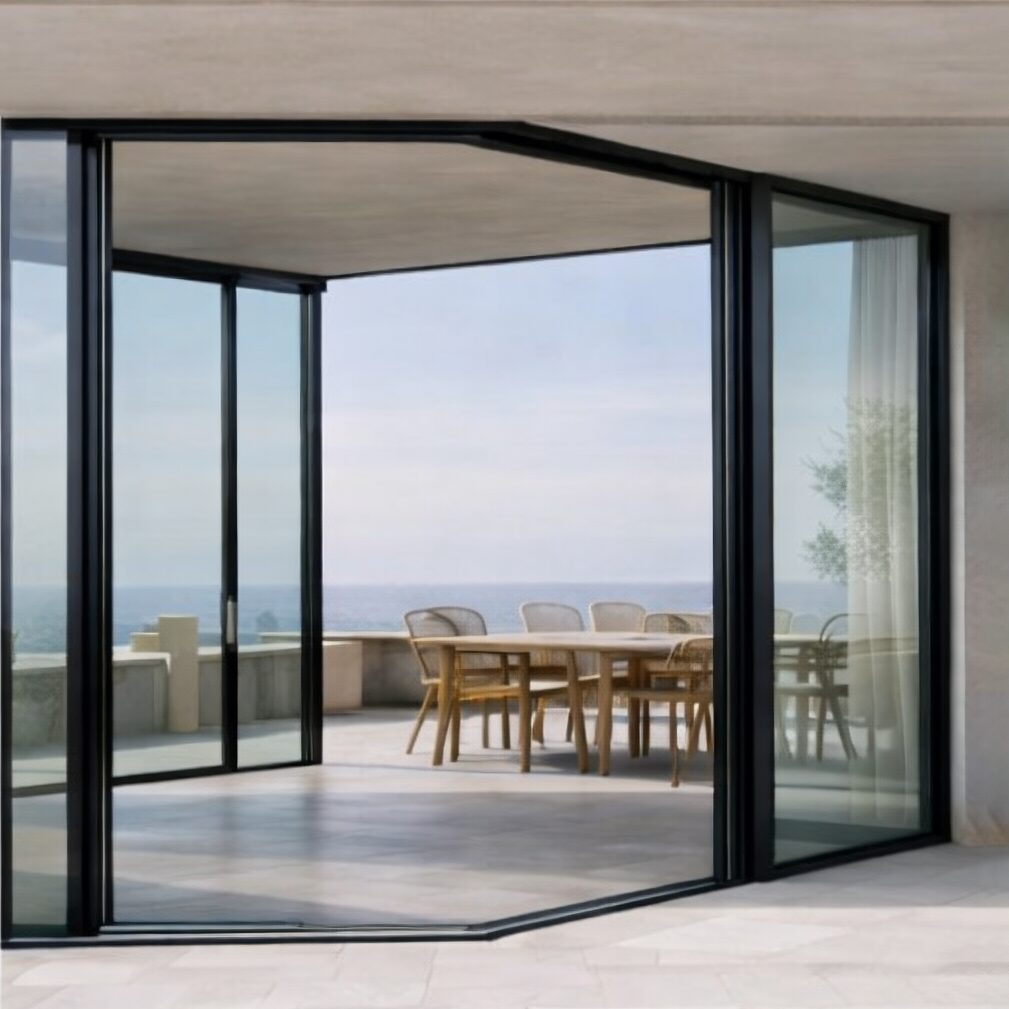
Two sets of doors meeting at 90 degrees without a corner post. When open, the corner of the room dissolves entirely. When closed, you get uninterrupted views on two sides with a slim vertical join where they meet.
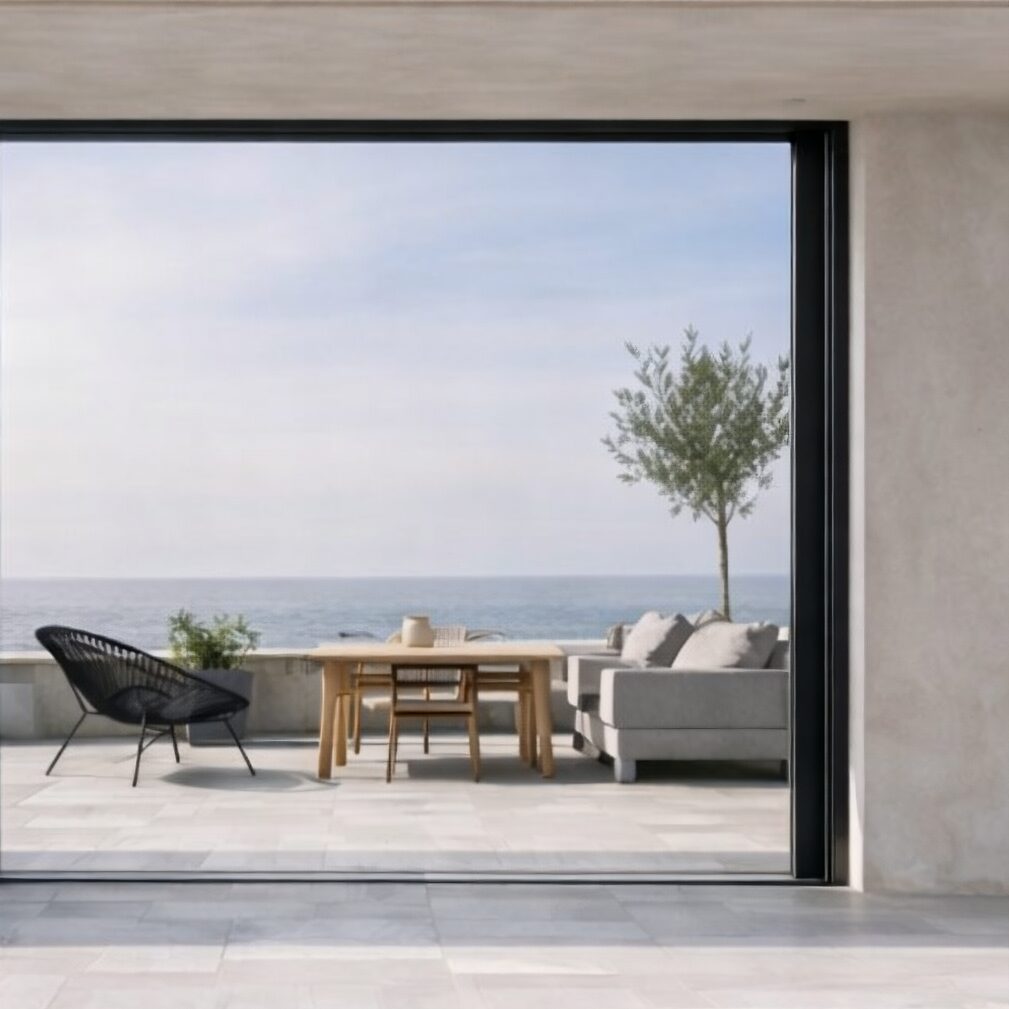
Panels slide into a cavity within the wall, disappearing completely when open. The opening becomes a true threshold. No stacked glass, no visible frame. Just architecture.
.

How often will the doors be fully open? A standard slider is quick to operate and works well for everyday access.
Pocket sliders take a moment longer but reward you with a completely clear opening.
Do you need partial ventilation? Standard and corner sliders let you open one panel at a time.
Pockets tend to be all or nothing.
Pocket sliders need a wall cavity built to receive the glass. That means deciding early, ideally at design stage.
Corner sliders need the structural engineer involved because there is no corner post to carry load. Standard sliders are the most forgiving. They can be specified later in the process and work with most opening preparations.
Where will your sofa go? Your dining table? Standard sliders stack to one side, which can affect furniture placement near the opening.
Pocket sliders leave the entire width clear. Corner sliders change the geometry of the room entirely. Sketch your furniture layout before committing.
Corner sliders make the most sense when you have views on two adjacent sides. Garden wrapping around, or a terrace with sea views. If your main view is directly ahead, a standard slider often does everything you need.
Pocket sliders shine when the opening itself is the feature. Framing a courtyard, connecting to a pool terrace, or creating an indoor-outdoor room that truly feels like one space.
In reality, most doors spend more time closed than open. Corner and pocket configurations are spectacular when open, but a standard slider looks just as clean when shut, and may be simpler to live with day to day.
Be honest about how often you will actually have them wide open.
"We went with a standard 3-panel because we wanted something reliable that the kids could use without thinking. It slides beautifully and we open it every morning without fuss."
"We built a pool house and wanted the whole back wall to disappear when we entertain. The pocket slider tucks completely into the wall. When it is open, guests do not even realise there were doors."
"Our plot wraps around a corner with sea views on two sides. A corner post would have cut right through the horizon. The corner slider was the only option that made sense."
Send us your drawings or dimensions. We will suggest what works.
Before we manufacture, yes. After survey we send you drawings to approve, and that is your last chance to adjust. Once we cut profiles and order glass, the configuration is fixed. If you are undecided, talk to us before survey and we can walk through the options again.
Standard sliders are the most economical. Corner sliders cost more because there are two sets of doors meeting at a engineered junction. Pocket sliders add cost for the cavity framing and the additional track hardware. As a rough guide, expect corners and pockets to add 20 to 40 percent to a comparable standard slider, depending on size.
Yes. We often supply a corner slider on one elevation with a standard slider elsewhere, or a pocket slider leading to a courtyard alongside fixed glazing. As long as you are using Cor Vision throughout, the sightlines and finishes match.
The track inside the cavity can collect dust over time. We recommend vacuuming the pocket once or twice a year. The rollers and hardware are the same as a standard slider and need the same care. If something does need attention inside the pocket, access is straightforward.
The vertical join where two sets meet is sealed and tested to the same standard as the rest of the system. In very exposed locations we may recommend additional drainage or shelter, but in normal use, corners perform as well as standard sliders.
It depends on how many panels and how deep a cavity you can build. A two-panel pocket with panels up to 2.5m wide gives you a 5m clear opening. Larger is possible with more panels. We will advise based on your wall construction and the space available for the pocket.
You can decide later, but configuration affects handle placement. Pocket sliders use flush handles so the panel can slide into the cavity. Standard and corner sliders have more handle options. We will talk through choices once you have settled on configuration.
Standard and corner sliders can be configured to slide externally if that suits your layout. Panels stack on the terrace side rather than inside the room. This keeps your internal floor area clear but means the stacked glass is exposed to weather when open.